1948 Women’s Integration Act
This article analyzes how the 1948 Act established combat exclusions and laid the legal foundation for later reforms to women’s roles in the U.S. military. It focuses on policy evolution and legal frameworks that began with the Act. This article will support the ongoing legal and institutional changes that have occurred over time.
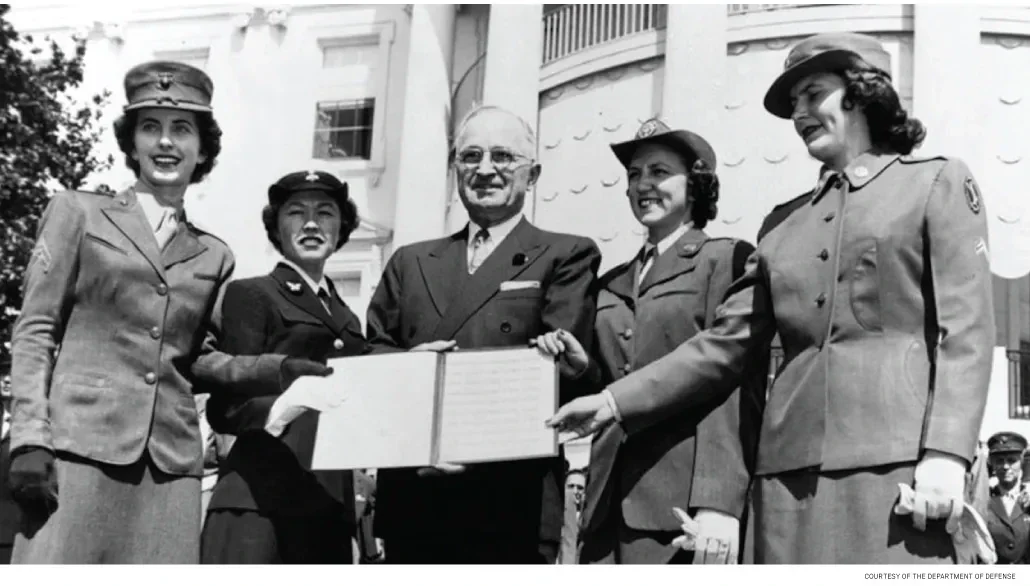
In 1948, a historic shift reshaped the structure of the United States military. The Women’s Armed Services Integration Act granted women permanent, regular status in the armed forces for the first time. No longer confined to temporary wartime service, women could now build military careers. Historian Brittany A. Huner explains that the act formally allowed women to serve in the regular and reserve branches of the military, recognizing the critical roles they had played during World War II (Huner). This photograph taken in 1952, shows President Harry S. Truman receiving the first commemorative stamp honoring women in the armed services, symbolizing the nation’s growing recognition of women’s wartime contributions. The image reflects a moment of public acknowledgment, as the government highlighted the importance of women’s service in shaping the modern military.

Yet this milestone carried clear limitations. The Act capped the percentage of women who could serve and barred them from combat roles, reinforcing assumptions about gender and military authority. While integration was codified into law, equality was not. Preserved today by the National Archives, the document reflects the tension between opening doors and carefully controlling how far women could step through them.
"Are you a girl with star-spangled heart?--Join the WAC now!--Thousands of Army jobs need filling!" (The National World War II Museum)