Women in Combat: After Integration
This article reports on the study of nearly 8,800 U.S. Army soldiers surveyed in 2021 after gender integration in infantry and armor units. The research explores how working alongside women, including women leaders, affects male soldiers' attitudes about gender integration, cohesion, and performance. Results show that exposure to women increases support for integration and reduces concerns about unit effectiveness, with qualitative themes offering insight into changes in attitudes within combat arms units.
Perceptions of Women in U.S. Army Combat Units: A Mixed-Methods Study Post-Gender Integration examines attitudes toward women serving in combat roles in modern day U.S. Army. The study analyzes survey data collected from 8,798 soldiers across active brigade combat teams. The author evaluates how direct exposure to female soldiers and leaders influence male soldiers views on gender integration in historically male-dominated combat branches such as infantry and armor. The findings show that soldiers who serve alongside women, particularly under female leadership, are significantly more likely to support gender integration and less likely to believe that women negatively affect unit cohesion or combat effectiveness (Miller, 2024).
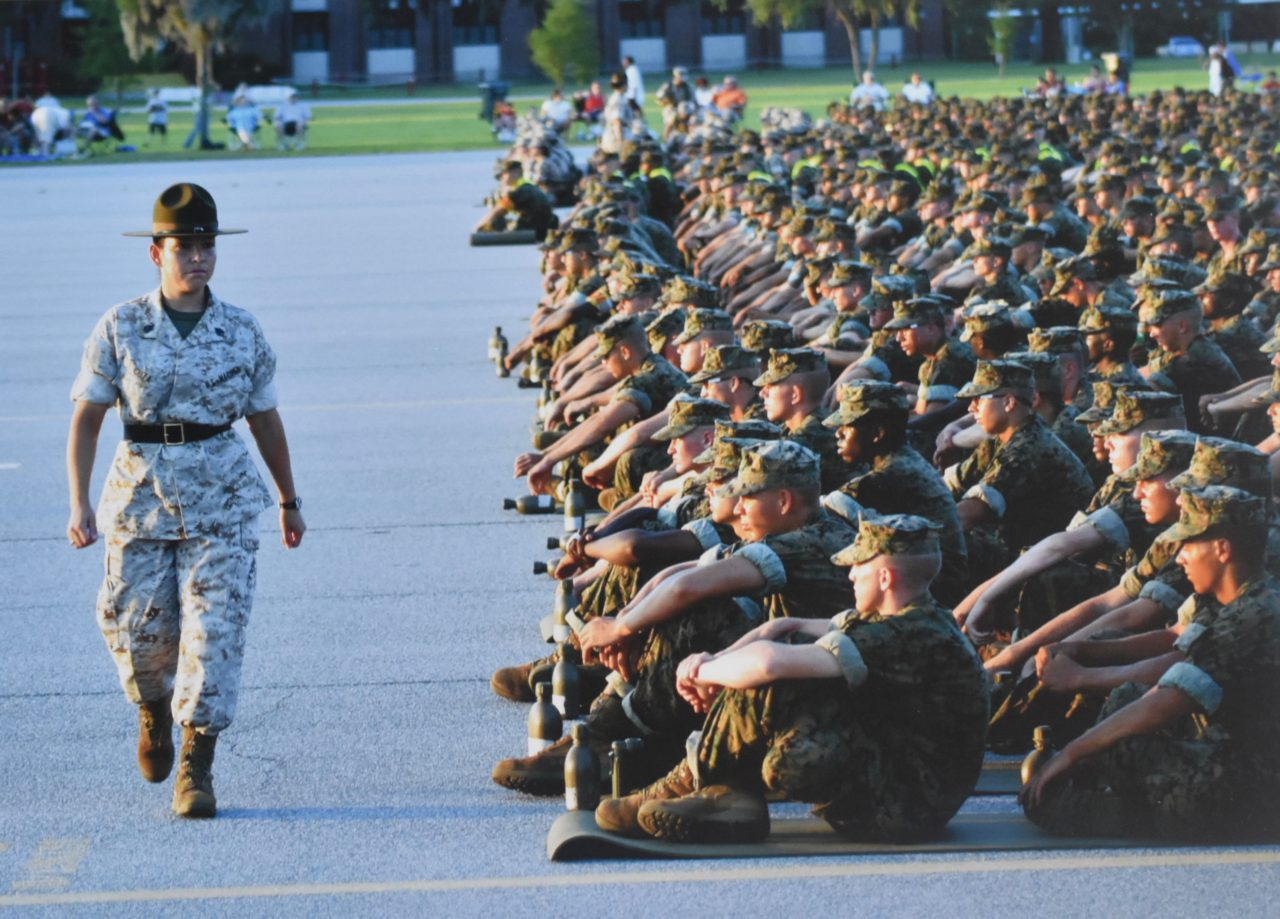
Woman Marine drill instructor inspects discipline of seated recruits lined up in platoon order (Penny Starr/Breitbart News, 2004).
The research highlights how real-world experience with female soldiers can challenge traditional gender assumptions and contribute to greater acceptance of women in combat positions, illustrating an important social and cultural shift in the military.
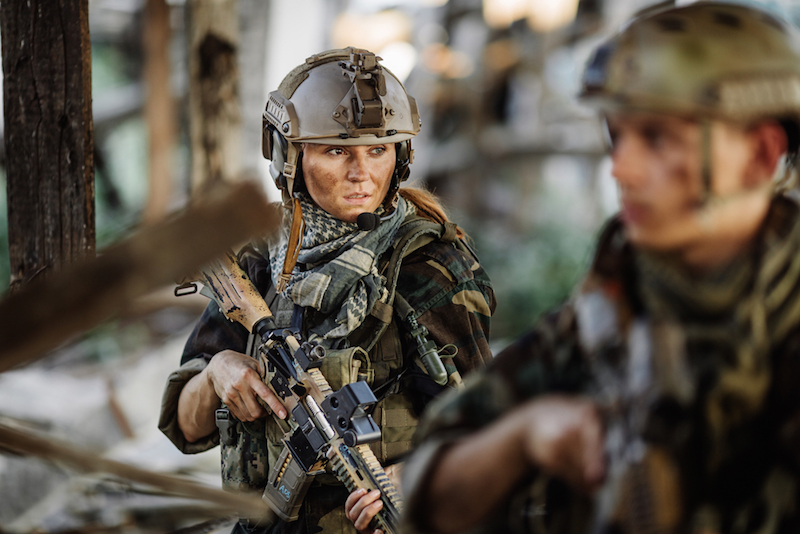
Female soldier completing combat training (livescience.com)